
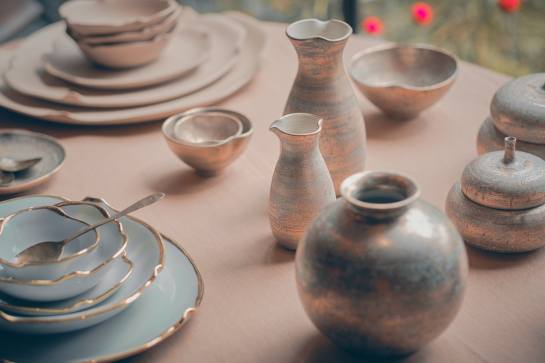
The handicrafts in Goa that matter most are still made by hand in village workshops. They include hand-painted azulejo tiles, terracotta from family kilns, Kunbi weaving, coconut and shell craft, and the rosewood carving behind old Indo-Portuguese furniture. They survive because Goans still use them at feasts, in homes and at the market, and finding them is one of the quiet pleasures of living in Goa.
Why Craft Still Matters Here
Walk through any old village in Bardez on a weekday morning and you will hear it before you see it. A potter's wheel turning. A chisel on wood. Someone splitting cane on a verandah while the radio plays Konkani songs.
Most Goa handicrafts began as useful things. A clay pot kept water cool through May. A woven basket carried fish from the boats at Chapora. A carved chest held a bride's linen. Beauty came later, almost by accident, and that is why these objects feel so honest. They were made to be lived with.
Centuries of Portuguese rule, older Hindu temple traditions and the rhythms of village life all left their mark. The result is a craft culture that is distinctly Goan. It is unhurried and practical, and it is quietly proud.
Azulejos: The Blue and White Tiles
You notice them first on house nameplates. A blue-and-white tile beside a front door gives the family name, sometimes with a saint or a sprig of flowers painted in the corner.
Azulejos came from Portugal, but Goan painters made them their own. Small studios around Panjim and Fontainhas still paint tiles by hand, firing them in kilns and selling them as house signs, murals and kitchen splashbacks. The cobalt is never quite even, and that is the point. Each brushstroke shows.
Commission a nameplate and you will usually wait a few weeks. It is worth it.
Terracotta and the Potter's Wheel
Goa's pottery tradition runs deep, especially in villages in Bicholim taluka and around the hinterland, where families have worked local clay for generations. Laterite soil gives much of the pottery its warm, rusty colour.
Look for:
- Water pots and cooking vessels, still preferred by many for fish curry.
- Diyas and festival lamps, made in great numbers before Diwali.
- Garden planters and roof tiles, the curved Mangalore-style tiles that crown so many old Goan homes.
Clay also gives Goa one of its most beloved sounds. The ghumot is a drum made from an earthen pot with a skin stretched across one mouth. It is played at Ganesh Chaturthi and at church feasts alike, two of the many festivals of Goa, and is now recognised as Goa's heritage instrument. Few objects say as much about the state's shared culture.
Kunbi Weaving: Red Checks of the Land
The Kunbi saree is perhaps the oldest textile in Goa. The Kunbi and Gawda communities, among the state's earliest settlers, wore this red-and-white checked cotton while working the paddy fields. It was tied short and knotted at the shoulder so women could move freely in the mud.
For years it almost disappeared. A revival, championed by the late designer Wendell Rodricks among others, brought weavers back to their looms. Today you will find Kunbi cotton in sarees, stoles, cushion covers and table runners. It looks wonderful against limewashed walls.
Coconut, Bamboo and Shell
The coconut palm gives Goa almost everything, and craftspeople use every part of it. Shells become ladles, bowls and lamps. Coir is twisted into rope and doormats. Dried fronds are woven into the thatch that still shades many beach shacks each season.
Bamboo and cane workers make baskets of every size, from the shallow sup used to winnow rice to the large carriers seen at village markets.
Few handicrafts in Goa are as quietly clever as the carepa window. Old houses used thin, translucent windowpane oyster shells set into wooden lattices instead of glass. The shells soften the hard afternoon sun into a pearly glow and keep rooms cool. Restorers still source and fit them, and standing in a carepa-lit room at four o'clock is something you remember.
Wood, Brass and the Indo-Portuguese Home
If one Goan handicraft defines the old houses of Goa, it is carved wood. Rosewood and teak were shaped into four-poster beds, high-backed chairs, altar cabinets and contadores, the inlaid chests that once held a family's papers and jewellery. The carving blends European scrollwork with Indian floral motifs, often in the same piece.
Brass and bell-metal work belongs more to Goa's temple traditions. Craftsmen cast oil lamps, ritual vessels and bells. Polished brass lamps still glow in temple courtyards during evening aarti.
Seasonal crafts fill in the year. Paper Christmas stars hang from balconies in December. Carnival floats are built by hand in village workshops. Clay and papier-mâché Ganesh idols take shape over weeks before Chaturthi.
Goan Crafts at a Glance
| Craft | Main materials | Where you might see it |
|---|---|---|
| Azulejos | Glazed ceramic, cobalt paint | Nameplates, murals, Fontainhas homes |
| Terracotta | Local clay | Kitchens, festival diyas, roof tiles |
| Ghumot | Earthen pot, skin | Feasts, Ganesh Chaturthi, church fests |
| Kunbi weaving | Cotton | Sarees, stoles, home textiles |
| Carepa windows | Oyster shell, wood | Heritage houses, restored manors |
| Coconut and coir | Shell, husk fibre | Bowls, lamps, rope, mats |
| Wood carving | Rosewood, teak | Furniture, altars, chests |
| Brass and bell metal | Brass, bronze alloys | Temples, household lamps |
How to Find and Buy Craft Responsibly
The best way to buy Goa handicrafts is straight from the people who make them. A few habits help:
- Go to the Friday market in Mapusa. Potters, basket weavers and spice sellers still come in from the villages.
- Visit studios, not only shops. Many tile painters and weavers welcome visitors if you call ahead.
- Ask about the maker. Good sellers know who made each piece and where.
- Pay fairly. Haggling over a hand-thrown pot that took a morning to make rarely feels right.
- Choose things you will use. A terracotta water pot on a kitchen shelf does more for a craft than a souvenir in a drawer.
Craft and the Homes We Build
At Vianaar, we have always believed a Goan home should feel as though it grew from its village. Over the years, our villas and manors across Assagao, Siolim and Vagator have drawn on local materials: laterite, terracotta, lime plaster and carved wood. Homes such as La Soleada in Assagao and Villa Eivissa in Siolim, both now sold, belong to that thinking. You can read more about our approach on our about page and our sustainability commitments.
In Parcem, a quiet village of paddy fields and old chapels near the Pernem coast, Villa Da Cima is now under construction. It is a 5 BHK manor shaped around courtyards, shaded verandahs and the slow light of the hinterland. It is a natural setting for a Kunbi throw, a hand-painted nameplate and the clay pots you bring home from Mapusa.
FAQs
What are the most famous handicrafts in Goa?
Hand-painted azulejo tiles, terracotta pottery, Kunbi weaving, coconut shell and coir work, carved rosewood furniture and carepa oyster-shell windows are the best known. Seasonal crafts such as Christmas stars and Carnival floats are much loved too.
Where can I buy authentic Goan crafts?
The Mapusa Friday market is a good start. Tile studios around Panjim, weavers' cooperatives and village potters are better still, because buying from them supports the maker directly.
Is the Kunbi saree still woven today?
Yes. After nearly fading away, it has been revived by weavers and designers. You will find it as sarees, stoles and home textiles.
What is a ghumot?
It is a traditional Goan percussion instrument made from an earthen pot with a skin stretched over one opening. It is played at both Hindu and Catholic festivals and is regarded as Goa's heritage instrument.
How can a new home reflect Goan handicraft?
Use local materials such as laterite and terracotta. Add a hand-painted azulejo nameplate, Kunbi textiles and carved wood. Our homes are designed to welcome exactly these touches, and our care team looks after them when you are away.
If you would like to see Villa Da Cima or talk about a home in North Goa, or explore our rentals, we would be glad to hear from you. Get in touch with us here.