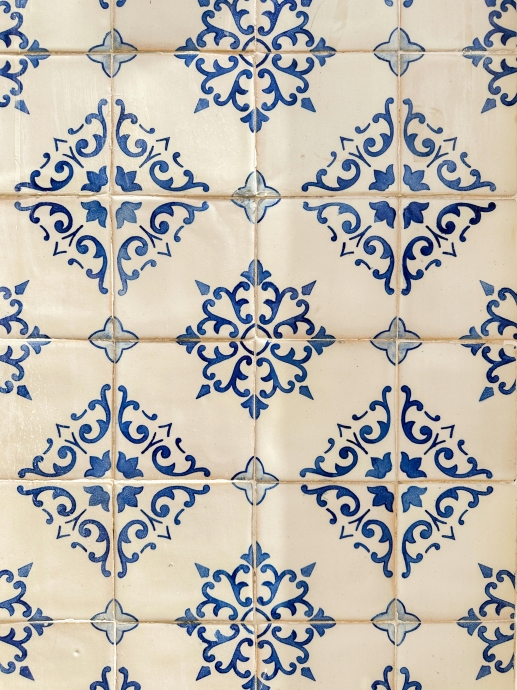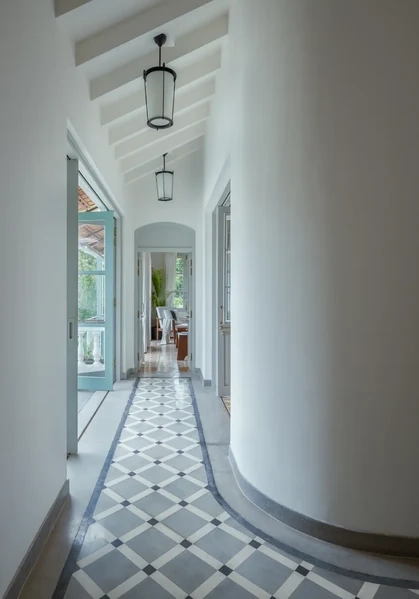
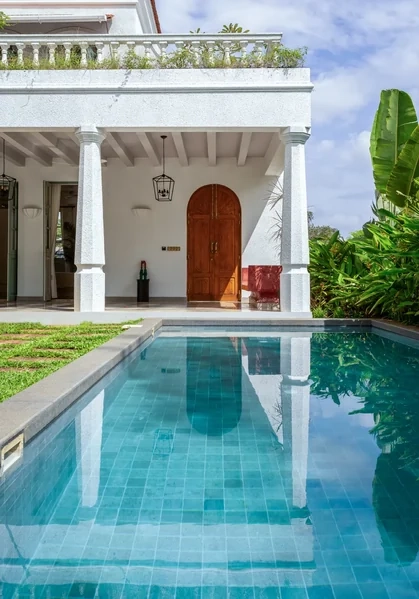
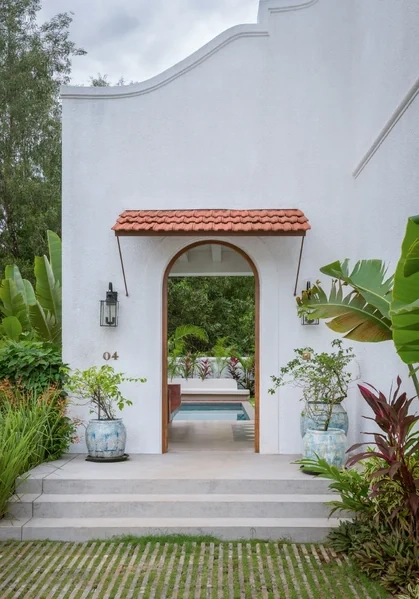
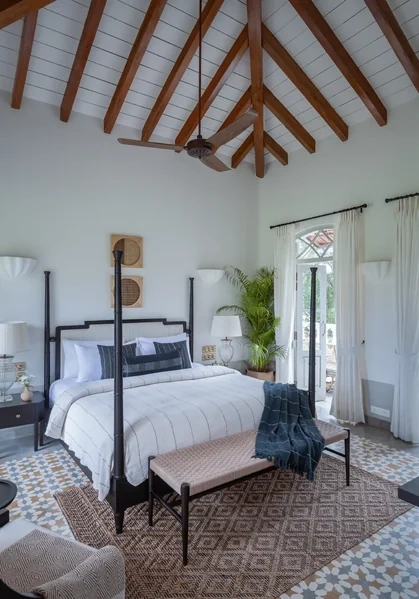
A Portuguese-style villa in Goa is defined by a few lasting elements: a raised plinth with a balcão at the entrance, thick laterite walls finished in lime, sloping clay-tile roofs, tall shuttered windows, and rooms arranged to catch light and air. The classic goan portuguese house blended European proportion with Konkan building sense. The best new homes keep that logic rather than simply copying the ornament.
Where the style comes from
Portuguese rule in Goa lasted more than four centuries, but the houses most people picture date largely from the eighteenth and nineteenth centuries. Families who had prospered from land, trade and professions abroad rebuilt their ancestral homes to show their standing. Chandor and Loutolim in the south are the famous examples. North Goa has its own: Aldona, Saligao, Siolim and Parra, where long façades sit behind gates and coconut palms.
It helps to know that most portuguese style houses in Goa are, strictly speaking, Indo-Portuguese. The pilasters, the symmetrical fronts and the grand salas came from Europe. The materials, the deep eaves and the way the house handles the monsoon came from local masons who had been building in this climate for generations. That mix is what makes the style feel so settled in the landscape. It was never an import dropped onto the land.
The elements that define the architecture
The balcão
No feature says goan portuguese house quite like the balcão. It is a covered porch at the front door, raised a few steps above the road, with built-in masonry seats facing each other. It was where the family sat in the evenings, greeted neighbours and watched the village go by. It is semi-public and semi-private at once, and it still works beautifully for that today.
Laterite and lime
The walls are laterite, the porous red stone cut from Goan hillsides. Traditionally they were thick, often well over a foot, and finished in lime plaster. Lime lets the wall breathe through the humid months, and thick stone keeps interiors cool long after the afternoon sun has moved on. Run your hand along an old wall in Aldona and you can feel the slight unevenness of hand-applied plaster.
Clay-tile roofs
Steep, sloping roofs covered in terracotta tiles shed the heavy monsoon rain quickly. Deep overhanging eaves protect the walls and windows below. Inside, the roof is often carried on timber rafters left exposed, which gives the rooms their height and a quiet, warm character.
Windows, shutters and oyster shell
Tall windows run in a steady rhythm across the façade, usually framed with plaster mouldings. Many older homes used thin, translucent panes of oyster shell in place of glass. They soften the harsh coastal light into something pearly and diffused. Wooden shutters and, on grander homes, wrought-iron or carved railings complete the look.
The sala, the plan and the courtyard
At the heart of the house is the sala, the formal hall used for celebrations, music and receiving guests. Many homes also had a family chapel or altar niche. Bedrooms open off the sala or off a long veranda, and larger houses were planned around an internal courtyard that pulls in light and lets hot air escape. Kitchens and store rooms usually sat at the back, near the well and the garden.
Colour
Façades were washed in strong, earthy colours: ochre, indigo, oxblood, a deep green. White pilasters and window surrounds picked out the details. After every monsoon, a fresh coat of colour was part of the rhythm of the year.
A quick reference
|
|
|
|
|
|
|
|
|
|
|
|
|
|
|
|
|
|
|
|
|
|
|
|
|
|
|
|
|
|
|
|
|
|
|
Reinterpreting the style today
A good goa portuguese villa today should not be a museum piece. Nobody wants to give up air-conditioning, generous bathrooms or a modern kitchen. The aim is to keep what the old builders understood about climate and comfort, and leave aside what no longer serves.
At Vianaar, that has meant pitched tiled roofs and deep verandas, courtyards that bring daylight into the middle of the house, local stone, and finishes chosen to age gracefully rather than look new forever. Our approach to sustainability grows from the same thinking: shade, airflow and materials suited to the coast do much of the work before any machine is switched on.
Our past homes reflect this. La Formosa in Aldona, La Masseria in Siolim and Santa Terra in Reis Magos all drew on village vernacular in their own way. All are now sold out, but they shaped how we design. You can see the wider range on our villas in Goa page, and read more about our story on the about page.
Villa Da Cima, Parcem: the manor tradition, now
For buyers drawn to the grand family houses of old Goa, the manor is the natural form. Villa Da Cima is a 5 BHK manor in Parcem, a quieter village in Pernem taluka, and it is currently under construction. It takes the scale and sense of occasion of a traditional Goan home, with its generous living spaces and room for an extended family, and pairs it with the comforts of a contemporary second home.
Explore our other manors in Goa to see how the form has evolved across our work.
Living with a home in this style
Old-style architecture asks for a little attention. Laterite and lime prefer breathable paints and periodic touch-ups, timber needs care through the rains, and roof tiles benefit from a check before the monsoon. For owners who live abroad or visit only a few months a year, our care services handle that upkeep.
The reward is a house that feels unhurried. Morning light through louvred shutters, the red earth after the first rain, an evening on the veranda while the paddy fields go silver. That susegad pace is much of why people buy here in the first place. Our guide to living in Goa covers the practical side of settling in.
FAQs
What is a balcão in a goan portuguese house?
It is the raised, covered porch at the main entrance, usually with built-in seats on either side. Families used it to sit outdoors in the evening, receive visitors informally and stay connected to village life without inviting everyone inside.
Are portuguese style houses in Goa only found in South Goa?
No. Chandor and Loutolim are well known, but North Goa has many fine examples too, especially in villages like Aldona, Saligao, Siolim and Parra. Walking these villages early in the morning is one of the best ways to understand the style.
Can a new goa portuguese villa include modern comforts?
Yes. The traditional elements, such as pitched roofs, deep verandas, courtyards and thick walls, sit comfortably alongside modern kitchens, en-suite bathrooms, pools and efficient services. The key is to keep the climate logic of the old houses rather than only the decoration.
Which materials matter most?
Laterite, lime-based plasters, terracotta roof tiles and good timber for doors, windows and rafters. These materials suit Goa's heat and humidity and age with character. Ask builders how walls are finished and how roofs are detailed for the monsoon.
Does Vianaar have a home in this tradition for sale?
Villa Da Cima, a 5 BHK manor in Parcem, is currently under construction and available. Our earlier homes in Aldona, Siolim and Reis Magos are sold out. For general buying questions, see our FAQ page.
If you would like to walk through Villa Da Cima's plans or talk about what a home in Goa could look like for you, we would be glad to hear from you. Get in touch with us here.