
Introduction
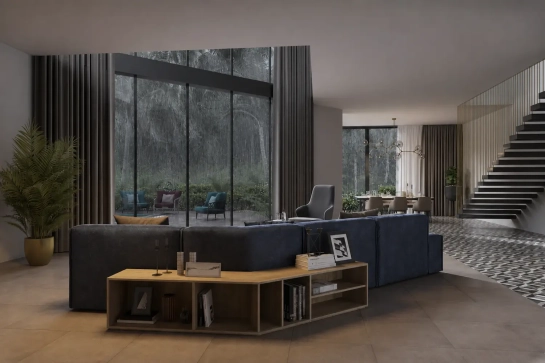
The monsoon in Goa changes the way a home is experienced. Rain arrives suddenly, gathers on tiled roofs, runs through channels and collects in gardens. For a few months, it becomes part of the everyday soundscape.
Architecture has a role in how that sound is received.
A deep veranda can soften the noise of heavy rain while keeping the garden within view. A sloping roof can make rainfall audible without allowing it to become intrusive. Courtyards bring the sound closer, while trees and planting absorb some of its intensity.
In this sense, a well-considered home does more than protect us from the weather. It allows us to experience it.
Why Rain Matters to Tropical Architecture
Goa receives most of its annual rainfall during the southwest monsoon, generally between June and September. This makes water one of the forces that tropical architecture must respond to from the beginning.
Roof pitch, drainage, overhangs, thresholds and ventilation are practical considerations. Yet they also shape how a home feels.
A wide roof protects an outdoor sitting area while creating a subtle acoustic transition between the interior and the rain outside. Water falling from a roof edge produces a softer, more continuous sound than rain striking a flat surface directly.
The details may be technical.
Their effect is deeply sensory.
The Veranda as a Listening Space
Between Inside and Outside
The veranda has long been an important part of life in Goa. It provides shade during brighter months and shelter during rain while maintaining a visual relationship with the landscape.
During Goa during monsoon, this in-between space takes on another quality.
You can sit beneath a covered roof and watch the garden disappear briefly behind a curtain of rain. The air remains cool. Conversations become quieter. The sound of water becomes the background to the room.
It is a simple architectural device, but it changes the experience of weather considerably.
The Sound of a Roof
Materials also influence sound.
Clay tiles, concrete, metal and timber each respond differently to rainfall. A tiled roof tends to create a textured, layered sound, while surrounding foliage adds another acoustic layer as water moves through leaves and branches.
The result is rarely one sound.
It is a combination of roof, garden, drainage, trees and distance.
A thoughtfully designed home allows these sounds to coexist without becoming overwhelming.
Courtyards Bring the Weather Closer
Courtyards create a more enclosed relationship with rain.
Unlike an open garden, they frame a smaller piece of sky and bring natural elements into the centre of the home. During the monsoon, this can make rainfall feel almost architectural.
Water collects briefly before finding its way through carefully considered drainage. Wet stone becomes darker. Plants become denser. Light changes throughout the day as clouds move overhead.
The courtyard becomes a place to observe rather than escape the weather.
Landscape Is Part of the Soundscape
Architecture cannot be separated from what surrounds it.
A mature garden changes the sound of rain. Leaves interrupt falling water. Grass absorbs movement. Trees create different layers of sound as rain travels from the canopy towards the ground.
This is why landscaping deserves the same consideration as the building itself.
A home surrounded by thoughtful planting experiences weather differently from one exposed entirely to hard surfaces.
The landscape becomes an acoustic buffer as much as a visual one.
Learning to Live With the Weather
Perhaps the most interesting quality of the monsoon is how quickly people adapt to it.
Plans become flexible. Walks happen between showers. Meals move beneath covered spaces. Afternoons slow down.
The rain does not necessarily prevent outdoor life. It changes the way it happens.
This is where architecture becomes most meaningful. A home designed for its climate gives people choices. It offers shelter without closing itself off, shade without losing daylight, and connection with nature without sacrificing comfort.
Good tropical design makes the weather part of the experience rather than an inconvenience to overcome.
Conclusion
The monsoon in Goa reveals aspects of architecture that remain almost invisible during the drier months. Roofs become instruments, verandas become listening spaces, courtyards frame the sky, and gardens soften the sound of falling water.
It is a reminder that a home is experienced through more than its proportions or appearance. Light, air, texture and sound all contribute to the way a space is understood over time.
This relationship between architecture, climate and landscape is central to Vianaar's approach to creating homes in Goa. La Marcella and El Barro are conceived within this broader understanding of tropical living, where the landscape is allowed to remain present and the changing seasons become part of everyday life.
For those considering luxury villas in Goa for sale, the more important question may be how a home feels when the weather changes. In Goa, that answer is often heard before it is seen: in the sound of rain against a roof, water moving through a garden, and a quiet afternoon spent beneath a shaded veranda.