
When you think of sweets, you probably think of something you pick up casually. A quick dessert. A bakery stop. A post-dinner craving. But Goan sweets were never meant to be everyday indulgences.
They are ceremonial, seasonal and slow-cooked. In most Goan homes, these desserts are tied to festivals, weddings, feast days, and family milestones. They aren’t impulse buys. They are planned. Prepared in advance, and often made in home kitchens rather than commercial bakeries.
If you want to understand Goan desserts, you have to look beyond the display counter and into the context behind them.
Goan Sweets Are About Occasion, Not Routine
In Goa, sweets signal something, for example:
- A festival is approaching.
- Guests are arriving.
- A church feast is being celebrated.
- A wedding is underway.
Unlike everyday mithai culture seen in many parts of India, Goan deserts are more time-bound. They appear during specific periods of the year, and their preparation often begins days in advance.
They are not made in a hurry. They are made with intention.
Patience Over Convenience
Most traditional Goan desserts are labour-intensive.
They involve:
- Slow baking
- Continuous stirring
- Careful layering
- Monitoring heat without rushing
There’s no shortcut version that tastes the same, and that patience is part of what gives these sweets their identity.
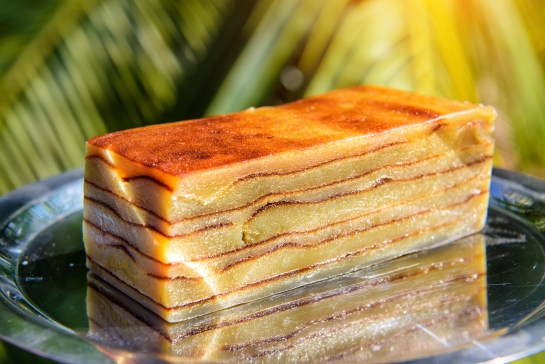
Layered & Slow-Baked: Bebinca
If there is one dessert most closely associated with Goa, it is Bebinca.
This layered, slow-baked dessert is made with coconut milk, egg yolks, sugar, and flour. But the real work lies in the layering.
Each layer is baked individually before the next one is added. That means someone is standing by the oven, carefully watching, repeating the process again and again.
In many homes, making Bebinca becomes a shared effort. One person prepares the batter, another manages the baking, and someone else monitors consistency. Visitors often see Bebinca as a “must-try.” Locals see it as a festive ritual.
Jaggery-Rich & Slow-Stirred: Dodol
Another classic among Goan sweets is Dodol.
Dodol is dense, dark, and deeply flavoured with jaggery and coconut milk. It requires constant stirring for long stretches of time to achieve the right texture.
Traditionally, large batches were made before major celebrations. Families would gather in kitchens, taking turns stirring so the mixture wouldn’t burn.
It’s not glamorous work. It’s repetitive. It’s slow. But it brings people together, and that’s the point.
Coconut-Based Festive Confections
Coconut is central to Goan desserts.
You’ll find it in:
- Coconut laddoos
- Perad (guava cheese)
- Sweet stuffed pastries
- Rice-based festive treats
Many of these are prepared in small batches for specific religious feasts or family events. They aren’t mass-produced. They aren’t styled for presentation. They’re made for sharing.
More Than Presentation- It’s Participation
One thing that defines Goan deserts is that they’re rarely about visual perfection.
They’re about:
- Taste
- Texture
- Tradition
- Participation
Children watch and learn. Grandmothers pass down measurements by memory. Recipes are adjusted slightly but never dramatically. The act of making the sweet often matters as much as the sweet itself.
The Closing Note to Bold Coastal Meals
Goan cuisine is known for bold, flavourful dishes, seafood curries, tangy gravies, and coconut-rich preparations.
After a meal like traditional Goan Fish Curry, which is vibrant and layered with spice, dessert isn’t just an afterthought. It’s the closing note.
Goan desserts provide balance. They soften the palate. They round off a strong coastal meal with sweetness that feels grounding rather than overpowering. In that sense, sweets are woven into the larger rhythm of Goan cuisine.
How Visitors See Them vs How Locals Live Them
For visitors, Goan sweets are often part of a checklist.
Try Bebinca. Buy Dodol. Take some back home.
But for locals, these sweets are connected to:
- Christmas gatherings
- Easter preparations
- Temple feasts
- Weddings
- Milestone celebrations
They mark time. They represent continuity. They are made because something meaningful is happening, not because someone wanted dessert after dinner.
Why They’re Not Everyday Treats?
Unlike pastries that are available year-round, many traditional Goan desserts are seasonal. Some are made in bulk only once a year. Others appear briefly during festive windows. That rarity preserves their value. If something is always available, it becomes ordinary.
Goan sweets resist that. They remain tied to moments.
A Tradition Preserved Through Care
At their core, Goan deserts are expressions of care.
- They require time
- They require attention
- They require more than one set of hands
- They are not about convenience
- They are about continuity
And perhaps that’s why they still hold their place even as modern bakeries and cafés expand across the state. They carry memory with them.
Final Thought
If you taste Bebinca or Dodol on your next visit, pause for a moment. Think about the hours behind that slice. The stirring. The layering. The waiting. Because Goan desserts are not just recipes. They are preserved rituals. They are how families celebrate. How communities gather. How tradition continues quietly, year after year.
Want to Experience Goa Beyond the Surface?
If you’re curious to explore more about Goa’s food traditions, festive culture, or local experiences, or looking to find a permanent home here, we’d love to help. Get in touch with us.
Because the best way to understand Goa isn’t just by tasting it, it’s by understanding the stories behind it.
FAQs
Which sweet is famous in Goa?
Bebinca is the most famous sweet in Goa. This layered coconut milk dessert is traditionally prepared during Christmas and major celebrations.
What is the queen of Goan sweets?
Bebinca is often called the “Queen of Goan Sweets” because of its rich texture, slow baking process, and strong association with festive traditions.
Which snack is famous in Goa?
Goa is famous for snacks like prawn rissóis, samosas, and chorizo pao. These are commonly enjoyed at local bakeries and evening gatherings.