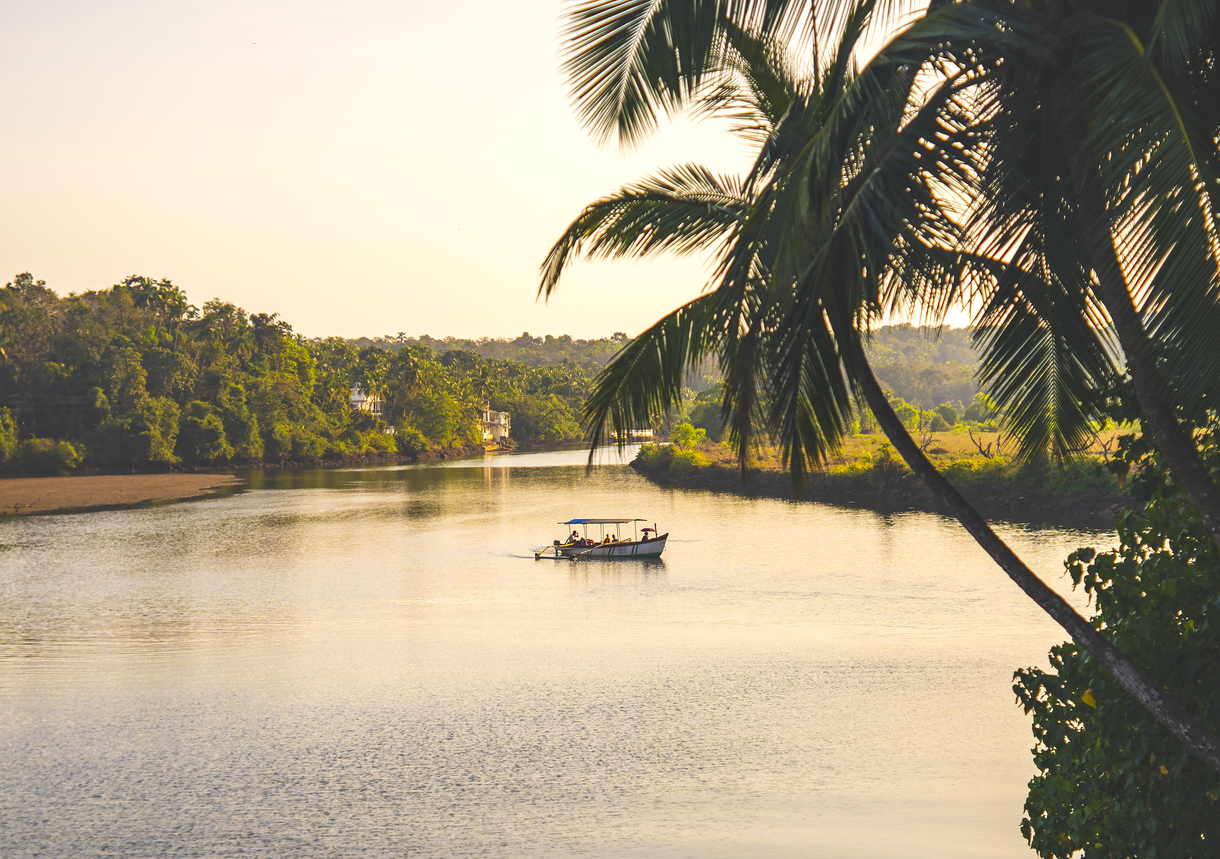
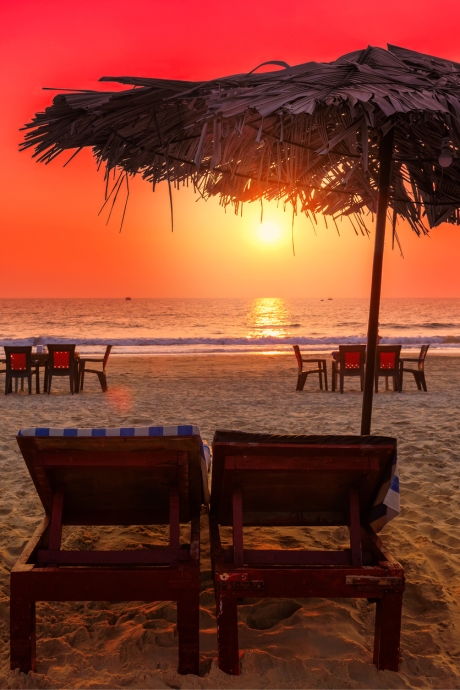
Spend enough time in tropical Goa, and one thing becomes immediately clear: colour behaves differently here.
The white walls of a home appear golden at sunrise, almost luminous by midday, and quietly muted as evening approaches. Terracotta deepens after rain. Green foliage shifts constantly with the changing light. Even stone seems to carry a different character from one hour to the next.
This is why the colors of Goa cannot be understood through paint charts or photographs alone. They are shaped by climate, humidity, vegetation, and the intensity of tropical daylight. Architecture, landscape, and materials all respond to these changing conditions, creating homes that feel deeply connected to their surroundings.
Understanding tropical light is, in many ways, understanding Goa itself.
Why Tropical Light Changes Everything
Light Is Constantly Moving
Unlike cooler climates where daylight can feel softer and more uniform, tropical light is dynamic.
Morning light arrives gently through layers of trees. By midday it becomes bright and direct, revealing texture, proportion, and shadow with remarkable clarity. Late afternoon introduces warmer tones that soften buildings and landscapes before fading into dusk.
The same wall can appear to hold several different colours within a single day.
This constant change explains why colour choices in Goa require careful consideration.
Humidity Shapes Perception
Moisture in the air subtly affects how colour is experienced.
After rainfall, stone appears richer. Timber deepens in tone. Lime plaster reflects light differently. Vegetation becomes more saturated.
The environment itself participates in the visual experience of architecture.
The Colours of Goa Are Drawn from the Landscape
Nature Provides the Palette
The most enduring colors of Goa rarely feel imported.
They emerge naturally from the landscape itself.
Laterite earth introduces deep reds. Lime plaster offers warm whites and soft creams. Palm leaves create countless variations of green. Weathered timber brings muted browns and greys. The Arabian Sea reflects shifting blues that change with the season and the sky.
These colours work because they belong to the place.
They do not compete with the landscape. They become part of it.
Why Restraint Often Lasts Longer
In tropical environments, highly saturated colours can appear more intense than expected under strong daylight.
Many architects therefore prefer quieter palettes built around natural materials rather than heavily applied finishes.
Stone, lime, timber, and terracotta continue to reveal subtle variations as light changes throughout the day.
The result feels calmer and more enduring.
Architecture Designed for Tropical Light
Materials Matter More Than Paint
Colour in Goa often comes from material rather than coating.
Lime plaster develops gentle tonal variation over time. Natural stone reflects changing weather. Timber acquires character through age and exposure.
These surfaces continue to evolve rather than remaining visually static.
That quality gives architecture a sense of permanence.
Shadow Becomes Part of the Design
Light cannot be separated from shadow.
Deep verandas, covered courtyards, recessed windows, and generous roof overhangs all influence how colour is perceived.
The architecture itself creates moments of contrast, allowing softer materials to feel richer without overwhelming the landscape.
Good design understands this relationship instinctively.
Living with Changing Light
Homes That Feel Different Throughout the Day
One of the pleasures of living in tropical Goa is discovering how familiar spaces continually change.
Morning sunlight moves slowly across a courtyard. Afternoon shade cools interior rooms. Evening light settles gently into gardens and terraces.
Rather than remaining visually fixed, the home evolves with the day.
This creates a living environment that rewards attention.
A Different Relationship with Time
People often associate colour with decoration.
In Goa, it becomes closely connected to rhythm.
The changing quality of daylight encourages people to notice small transitions that might otherwise go unseen. Daily routines become linked to the movement of light through architecture and landscape.
Over time, this changes the way a place is experienced.
Why Simplicity Endures
Design That Belongs to Its Setting
Some of Goa's most memorable homes are also among its most restrained.
Their beauty comes from proportion, carefully chosen materials, generous landscaping, and an understanding of how tropical light interacts with every surface.
Nothing feels imposed.
The environment completes the architecture.
Looking Beyond Trends
Colour trends inevitably change.
Natural materials rarely do.
Homes that rely on stone, lime, timber, and carefully considered planting continue to feel relevant because they respond to the landscape rather than to fashion.
Their character grows stronger with time.
Conclusion
The colors of Goa are never fixed. They shift with changing skies, seasonal weather, surrounding vegetation, and the movement of tropical light throughout the day.
Perhaps that is why architecture here feels so alive. Materials reveal new qualities with each passing hour. Spaces transform without alteration. The landscape becomes an active participant in everyday life rather than a backdrop beyond the windows.
Living in tropical Goa is, in many ways, an invitation to notice these subtle changes. Over time, they become part of daily experience, shaping not only how a home looks but how it is lived in.
That appreciation for natural materials, thoughtful architecture, and a lasting relationship with the landscape continues to guide Vianaar's work in Goa. For those exploring Luxury villas for sale in Goa, La Marcella reflects a design philosophy rooted in light, craftsmanship, and the character of its surroundings. For those seeking Luxury apartments for sale in Goa, El Barro offers homes where contemporary architecture responds naturally to Goa's climate, colours, and enduring sense of place.
FAQs
Why do colours appear different in tropical Goa?
Tropical light is stronger and changes noticeably throughout the day. Combined with humidity, vegetation, and seasonal weather, it affects how colours and materials are perceived.
What are the natural colours of Goa?
The colours of Goa are inspired by laterite stone, lime-plastered walls, tropical greenery, terracotta roofs, timber, sandy beaches, and the changing blues of the Arabian Sea.
Why do architects prefer natural materials in Goa?
Natural materials respond well to the tropical climate, develop character over time, and create subtle variations in colour that work harmoniously with changing daylight.
How does tropical light influence architecture?
It affects material selection, orientation, shading, window placement, and the use of courtyards and verandas to manage light, heat, and comfort throughout the day.
Why do many homes in Goa use muted colour palettes?
Muted palettes built around natural materials remain comfortable under intense tropical light and tend to age more gracefully than highly saturated colours.
How does landscape affect the appearance of a home?
Trees, gardens, seasonal vegetation, and reflected light all influence how materials and colours appear, making architecture feel closely connected to its natural surroundings.