There is a moment when a home no longer explains itself.
In a Vianaar residence, this moment arrives without notice. The architecture withdraws from the foreground. What remains is a state of calm that feels considered rather than designed.
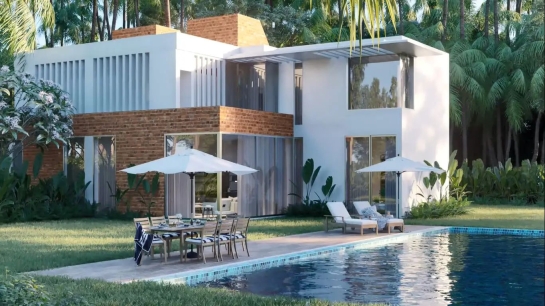
Luxury here is not expressed through scale or ornament. It is present in the way the house receives you. The air moves freely through shaded spaces. Light arrives filtered and deliberate. The transition from outside to inside is unforced. Nothing seeks attention. Everything feels resolved.
A slower internal rhythm
Living in a Vianaar home changes pace before it changes perception.
Mornings unfold quietly. Stone floors retain the night’s cool. Courtyards draw air through the house instead of containing it. Movement becomes slower. Sound becomes optional. Time is sensed rather than checked.
This is still not an idea. It is a physical response to space shaped with restraint. Rooms are proportioned to living, not display. Circulation feels intuitive. There are no abrupt shifts, no architectural gestures that interrupt attention.
With time, this rhythm becomes instinctive. The house teaches restraint, for example.
Privacy as comfort
Luxury is often associated with visibility.
Here, it is defined by discretion.
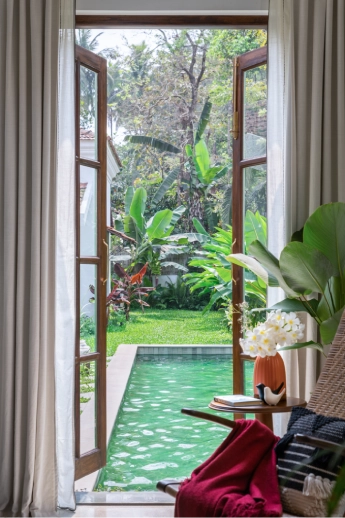
Openings frame trees, sky, and shadows. They do not frame other lives. Neighbors are present, but never intrusive. The sound dissipates naturally. Evenings arrive without interruption.
This privacy is not isolated. It steadies. The home allows retreat without withdrawal, protection without enclosure. It offers a sense of presence that requires no performance.
Material honesty
Materials are allowed to exist without emphasis.
They age quietly.
Stone, wood, plaster, and concrete are left close to their natural state. Light reveals their texture rather than decorating it. There is no pressure to fill walls or occupy every surface. Space is permitted to remain open.
Over time, you become more selective. Objects enter slowly. Many never arrive. The house does not wait to be completed. It already understands its purpose.
Living with climate
In Goa, the climate is not secondary.
A Vianaar home responds with precision.
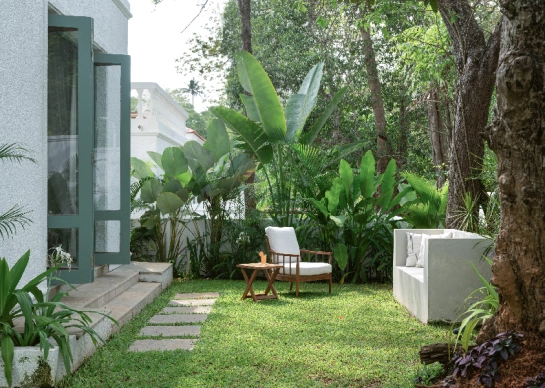
Shaded thresholds, cross ventilation, and layered outdoor spaces allow the house to breathe with its surroundings. Rain is heard before it is seen. Heat is moderated rather than resisted. The boundary between inside and outside remains intentionally soft.
As a resident, control gives way to awareness. You adjust your movement, your timing, your expectations. The house encourages cooperation with the environment, not dominance over it.
What remains
The most lasting quality of living in a Vianaar home often appears elsewhere. You become less tolerant of excess. Quieter evenings feel sufficient. Light is noticed before objects. Rooms that demand attention feel unfamiliar.
The house does not ask me to remember.
It simply recalibrates what feels necessary.
This is a luxury as a living condition.
Measured. Enduring. Personally.
To experience this sensibility firsthand, explore luxury stays in Goa that are shaped by calm, climate, and considered design.
FAQs
What defines luxury in a Vianaar home?
Luxury is expressed through calm, privacy, climate-responsive design, and spaces that feel resolved rather than ornamental.
How does a Vianaar home influence daily living?
The architecture naturally slows daily rhythms, encouraging quieter mornings, intuitive movement, and a more attentive way of living.
Are Vianaar homes designed for privacy?
Yes. Openings are carefully positioned to frame nature while maintaining discretion and minimizing external disturbance.
What materials are used in Vianaar residences?
Natural materials such as stone, wood, plaster, and concrete are used in restrained ways that age gracefully over time.