
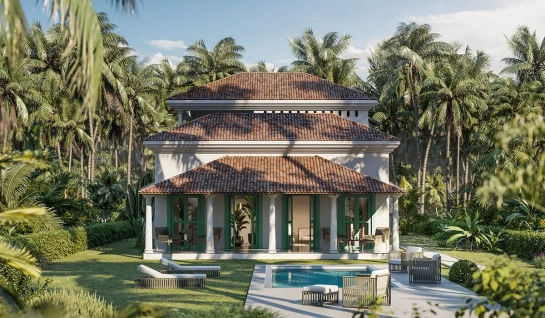
A morning in Goa is often defined less by activity than by atmosphere. Light arrives gradually, moving through palms, courtyards, verandas, and garden walls before settling into the rhythm of the day. In a thoughtfully designed villa, architecture becomes a framework for this daily transition, allowing residents to experience Goa through changing patterns of sun, shade, breeze, and landscape.
The experience extends beyond the early hours. As daylight softens, an evening in Goa brings a different character to the same spaces. Rooms that felt open and luminous in the morning become quieter and more intimate. Gardens take on a new depth. Outdoor living shifts from sunlit terraces to candlelit courtyards.
For many homeowners, this progression is one of the defining pleasures of life in Goa: a day shaped naturally by light.
Why Light Defines Life in Goa
Goa's climate and landscape create conditions where light is a constant architectural presence. Tropical skies, dense vegetation, seasonal shifts, and coastal humidity all influence how spaces are experienced throughout the day.
In traditional Goan homes, architecture evolved as a response to these conditions. Deep verandas moderated heat. Shaded courtyards introduced daylight without exposure. Openings were positioned to encourage airflow and frame views of gardens and distant landscapes.
Contemporary villas continue this approach, though often with greater spatial openness and stronger connections between indoor and outdoor living.
The result is architecture that does not simply shelter its occupants. It reveals the changing qualities of the day.
Morning in Goa: The House Awakens
Soft Light and Quiet Spaces
A morning in Goa begins gently. The first light often filters through layers of foliage before reaching the home itself, creating a softened brightness rather than direct intensity.
Bedrooms facing east receive early daylight that gradually illuminates natural materials such as timber, stone, lime plaster, and hand-crafted finishes. The effect is subtle and restorative.
In well-designed homes, this transition feels effortless. Spaces brighten naturally without relying on artificial lighting, allowing residents to wake in step with their surroundings.
The Relationship Between Home and Garden
Morning also reveals one of the most important aspects of villa living in Goa: the connection between architecture and landscape.
Gardens become active with movement and sound. Birds move through the canopy. Breezes carry the scent of flowering plants and damp earth. Reflections appear across water features and pools.
The house becomes part of a larger ecosystem rather than a separate object within it.
This relationship contributes significantly to the sense of privacy many homeowners seek. Boundaries are often created through landscape design rather than enclosure, producing a feeling of seclusion while maintaining openness.
Midday: Shade, Proportion and Retreat
As the sun rises higher, architecture assumes a different role.
Good design in Goa is often measured by how comfortably a home performs during the warmest hours of the day. Deep overhangs, covered terraces, internal courtyards, and carefully positioned openings help regulate temperature while maintaining visual connection to the outdoors.
Spaces Designed for Climate
The most enduring homes are those that work with the climate rather than against it.
Natural ventilation, generous ceiling heights, shaded circulation areas, and robust materials create environments that remain comfortable throughout the day.
These elements are rarely dramatic. Their value lies in how naturally they support daily life.
A well-proportioned room feels calm because it responds intelligently to light, air, and scale.
Evening in Goa: A Change in Character
The Softening of the Landscape
An evening in Goa introduces a slower pace. As temperatures ease, outdoor spaces become central once again.
The landscape begins to absorb the last light of the day. Shadows lengthen across gardens and pathways. Trees create intricate patterns against walls and courtyards.
What was bright and expansive in the morning becomes layered and atmospheric.
This transformation is one reason outdoor living remains such an important part of residential architecture in Goa.
Gathering Spaces and Quiet Rituals
Evening encourages a different use of the home.
Terraces become places for conversation. Courtyards offer quiet moments of reflection. Dining spaces open towards gardens and pools illuminated by soft lighting.
The focus shifts away from movement and towards presence.
Architecture supports these rituals through careful planning rather than excess. Material textures become more pronounced. Warm lighting complements natural darkness. The boundaries between indoors and outdoors become less distinct.
The experience feels composed rather than orchestrated.
How Architecture Shapes the Daily Rhythm
The most successful villas do not impose a way of living. They support one.
A house shaped by light acknowledges that each part of the day carries its own atmosphere and purpose. Morning encourages openness and renewal. Midday invites retreat. Evening creates opportunities for gathering and reflection.
This rhythm becomes especially valuable in a world often defined by constant acceleration.
Homes that respond to natural cycles offer a different experience. They encourage attention to place, season, weather, and landscape. They create space for routines that feel measured rather than scheduled.
In Goa, where climate and environment remain such powerful influences, this relationship between architecture and light becomes particularly meaningful.
Conclusion
A morning in Goa offers more than a beautiful beginning to the day. It establishes a rhythm that unfolds gradually through changing light, shifting temperatures, and evolving relationships between home and landscape.
By the time evening in Goa arrives, the same spaces reveal an entirely different character. Gardens deepen in tone, architecture becomes more intimate, and the day settles into stillness.
For those drawn to thoughtful living, this daily progression represents one of the quiet rewards of a well-designed Goan villa: a home that moves naturally with its environment and becomes richer through the simple passage of light.
FAQs
What makes a morning in Goa unique?
A morning in Goa is characterised by soft tropical light, cooler temperatures, natural sounds, and strong connections between architecture and landscape. Many homes are designed to maximise these qualities through gardens, verandas, and carefully oriented living spaces.
Why is light important in Goan villa design?
Light influences comfort, atmosphere, and the relationship between indoor and outdoor spaces. Thoughtful design uses natural daylight to create spaces that feel calm, functional, and connected to the surrounding environment.
How does architecture respond to Goa's climate?
Goan villas often incorporate shaded terraces, courtyards, natural ventilation, deep overhangs, and durable materials that help manage heat while maintaining openness and visual connection to nature.
What is special about an evening in Goa?
An evening in Goa brings cooler temperatures, softer light, and a greater emphasis on outdoor living. Gardens, courtyards, terraces, and dining spaces become central to the experience of the home.
Why are indoor-outdoor connections important in Goa?
The region's climate and natural beauty encourage a lifestyle closely connected to the landscape. Indoor-outdoor design allows residents to experience changing light, vegetation, and seasonal shifts throughout the day.
How does a well-designed villa support slower living?
By responding to natural rhythms rather than imposing artificial ones. Thoughtful architecture creates spaces that encourage rest, reflection, gathering, and a deeper awareness of the surrounding environment.