
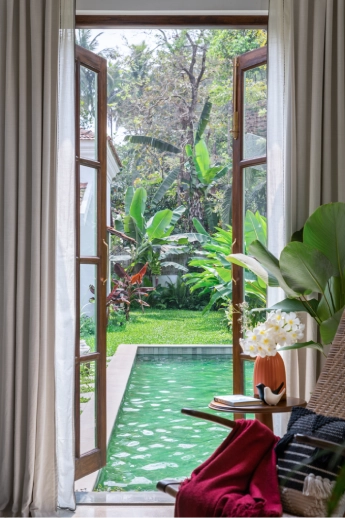
In Goa, architecture has never really been about resisting the environment. It has always been about understanding it first.
Long before terms like passive cooling or climate-responsive design became part of modern architecture conversations, homes in Goa were already being built around shade, airflow, monsoon patterns, and the movement of heat through space. The traditional balcaos, sloping roofs, inner courtyards, deep verandahs, and laterite walls seen across old Goan homes were built as a part of practical responses to the climate of Goa.
And even today, those principles continue to matter. Especially when you experience the climate in Goa in June, when the humidity rises, the monsoon arrives, and the way indoor and outdoor spaces feel together starts changing completely. A well-designed home starts feeling noticeably different during this time; cooler, calmer, and naturally more comfortable to live in.
That’s also why conversations around architecture and the Goa climate now feel increasingly relevant again. In many ways, passive design in Goa isn’t a new idea at all. It’s simply a thoughtful continuation of something the region has understood and built homes around for generations.
Why Traditional Goan Homes Were Designed This Way
Traditional Goan homes were never designed around aesthetics alone. But almost every element served a practical purpose connected to the environment around it.
Deep verandahs reduced direct heat indoors, sloping roofs handled heavy monsoon rain, and inner courtyards helped air move naturally through the house. Even windows were often positioned according to the direction of the wind.
These homes were built at a time when comfort depended entirely on how well the architecture responded to the climate. And because of that, older Goan homes often continue feeling surprisingly comfortable even today, especially during the climate in Goa in June, when heat, humidity, and rainfall become far more noticeable.
Many of these ideas still remain relevant to the Goa climate now. While homes today may feel more contemporary in their design language, principles like shade, ventilation, natural light, and a strong connection to the surrounding landscape continue to remain an important part of the architectural approach at Vianaar.
The Elements That Shape A Home In Goa
Water, Shade, and Ventilation shape the experience of a home. In Goa, these elements often become some of the most important starting points for good design. The way a home receives sunlight, allows air to move through space, or opens itself towards surrounding greenery can completely shape how comfortable it feels through the year.
Shaded verandahs help with the afternoon heat, water bodies and landscaping help cool outdoor spaces naturally, and cross ventilation keeps interiors feeling lighter and more breathable. These details become even more noticeable during the climate in Goa, when the monsoon arrives and the connection between architecture and environment becomes far more visible in everyday life.
It’s also why homes designed around the climate of Goa tend to feel more settled within their surroundings. These principles continue shaping the way we design our homes, where natural light, ventilation, landscape, and spatial openness remain central to the living experience.
Designing Homes That Feel Natural To Goa
In a place like Goa, architecture is experienced every single day through light, air, rain, shade, and the changing rhythm of the seasons. And over time, the homes that continue feeling the most comfortable are often the ones designed with those conditions in mind from the very beginning.
That’s what makes passive design feel so relevant to the Goa climate now. It isn’t simply about sustainability or architectural theory; it’s about creating homes that feel calmer, more breathable, and more connected to the environment around them through every part of the year.
It’s also a philosophy that continues to shape the design approach at Vianaar, where homes are thoughtfully designed around Goa’s landscape, climate, and the experience of living within it.
FAQs
1. What does passive design mean in homes?
Passive design refers to architectural planning that helps homes stay naturally comfortable through ventilation, shade, natural light, orientation, and climate-responsive design decisions.
2. Why is passive design important in Goa?
The climate of Goa includes strong tropical sunlight, humidity, and heavy monsoon rainfall for a large part of the year. Passive design helps homes respond more naturally to these conditions while improving comfort indoors.
3. What is the climate in Goa in June usually like?
The climate in Goa in June usually marks the arrival of the monsoon season. The weather becomes rain-heavy, more humid, and noticeably cooler compared to peak summer months.
4. How does landscape design influence homes in Goa?
Trees, water bodies, gardens, and surrounding greenery can help cool outdoor spaces naturally while improving airflow, shade, and the overall living experience.
Many traditional Goan design principles were developed around the local climate and continue remaining relevant because they improve comfort naturally throughout changing seasons.