Introduction
The story of Kasauli is written across its wooded slopes, old buildings and quiet roads. Among its most recognisable landmarks are Christ Church, a historic church in Kasauli, and the Central Research Institute, an institution that has played an important role in India’s medical history.
The two belong to different traditions. Christ Church reflects the hill station’s colonial beginnings and ecclesiastical architecture, while the Central Research Institute represents Kasauli’s long association with scientific research and public health. Together, they offer a useful way of understanding how the town developed beyond its landscape.
For anyone interested in Kasauli, these are more than places to visit. They reveal how architecture, institutions and the natural setting have shaped the identity of the hills.
Christ Church: The Historic Church in Kasauli
A Landmark of the Old Cantonment
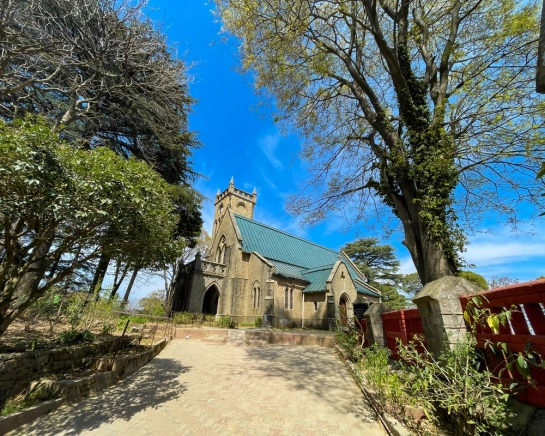
Christ Church stands near Kasauli’s historic centre and is among the town’s best-known buildings. Consecrated in 1853, it was established during the early development of Kasauli as a British hill station.
Its architecture carries the restrained character associated with Victorian-era churches. The building has a distinctive stone exterior, pointed arches and a simple, vertical composition that sits comfortably within the surrounding landscape.
The setting is important.
Rather than dominating the town, the church forms part of the quiet fabric of Kasauli. Trees, old roads and colonial-era buildings surround it, creating the sense that architecture and landscape have developed together over time.
Architecture That Has Aged With the Hills
The appeal of Christ Church lies partly in its proportions.
Its tall windows draw attention upwards, while the relatively simple exterior allows the building’s form to remain clear. Inside, stained-glass windows add colour and detail without overwhelming the restrained character of the structure.
The church also demonstrates something characteristic of older hill architecture: buildings were conceived in response to their surroundings rather than as isolated objects.
The result is a landmark that feels settled into its location.
The Central Research Institute: A Different Chapter of Kasauli
A short distance away, the Central Research Institute represents another side of the town’s history.
Established in 1905, the institute became associated with research into vaccines, sera and biological products. Its work contributed to the development of public health infrastructure in India and gave Kasauli a significance extending well beyond its identity as a hill station.
Its presence adds another layer to the town.
Kasauli was not simply created as a retreat from the plains. It also became a place where institutions, research and public services could operate within the distinctive conditions of the Himalayan foothills.
Two Landmarks, Two Ideas of Place
Christ Church and the Central Research Institute tell different stories, yet they share a common setting.
The church represents community, faith and the early colonial history of Kasauli. The institute represents scientific inquiry and institutional development.
Together, they show how the town evolved through different forms of occupation and purpose.
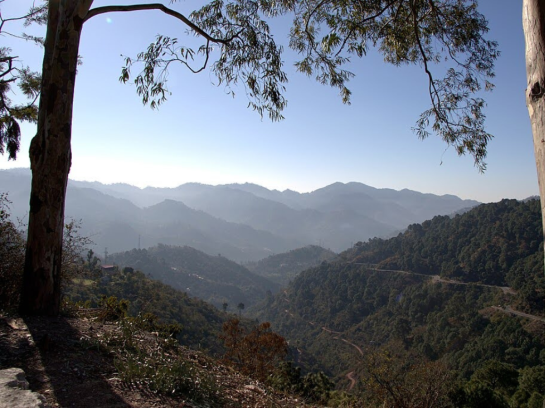
There is also something revealing in their relationship with the landscape. Neither landmark needs to compete with the hills around it. Their character comes partly from their setting, from the scale of the buildings and from the slower rhythm of the town itself.
This relationship remains central to Kasauli’s appeal today.
Why These Landmarks Still Matter
Historic places become meaningful when they continue to inform how a destination is experienced.
A walk through Kasauli often moves between forested stretches, old architecture, local shops and long views across the hills. Christ Church becomes part of that sequence rather than an isolated attraction. The Central Research Institute adds another point of reference, reminding visitors that the town has a history of intellectual and institutional importance alongside its natural beauty.
For someone considering a home in Kasauli, these details offer a deeper understanding of the place.
A residence here exists within an established landscape and cultural context. The value of the setting lies in its continuity: mature trees, familiar paths, historic structures and the changing light across the hills.
Living With Kasauli’s History
The strongest places tend to reveal themselves gradually.
Kasauli does so through its architecture as much as its forests. Christ Church provides a window into the town’s nineteenth-century origins, while the Central Research Institute reflects a later chapter shaped by science and public health.
Together, they help explain why Kasauli feels distinct from many contemporary mountain destinations.
For those looking to make that character part of everyday life, Dappled Light Estate offers a considered approach to living within the hills. Its relationship with the surrounding landscape reflects the quieter qualities that make Kasauli enduring: privacy, natural light, mature vegetation and architecture that sits comfortably within its setting.
If you are exploring luxury villas for sale in Goa, La Marcella and El Barro offer a similar Vianaar understanding of architecture rooted in place, expressed through a very different landscape. For those seeking villas for sale in Kasauli, Dappled Light Estate offers the opportunity to live closer to the slower rhythms and wooded character of the hills.